RNA Methylation: m6A, m5C and Epitranscriptomics
Explore RNA methylation, m6A, m5C, RNA methyltransferases, epitranscriptomics and their roles in gene expression and molecular biology research
Discover how chemical modifications of RNA influence gene expression, RNA stability, translation and cellular processes through the rapidly evolving field of epitranscriptomics.
The study of RNA methylation has become increasingly important in molecular biology, genomics and biotechnology. While DNA methylation is widely recognized as a mechanism involved in epigenetic regulation, researchers are also investigating how chemical modifications of RNA contribute to the control of gene expression.
Among the different RNA modifications, N6-methyladenosine (m6A), 5-methylcytosine (m5C) and N1-methyladenosine (m1A) have attracted considerable scientific attention. Their distribution and biological functions provide new perspectives on RNA metabolism and cellular regulation.
What Is RNA Methylation?
RNA methylation is a biochemical process in which a methyl group (CH3) is added to a nucleotide within an RNA molecule. This modification can occur on different RNA types, including messenger RNA (mRNA), transfer RNA (tRNA), ribosomal RNA (rRNA) and non-coding RNA.
These chemical marks can influence RNA structure, molecular interactions, stability, processing and translation. Rather than changing the underlying nucleotide sequence, RNA methylation modifies how the RNA molecule behaves and how cellular machinery interprets it.
Understanding the Main Types of RNA Methylation
Different RNA methylation patterns occur at specific nucleotide positions. Each modification has distinct biochemical properties and may influence different aspects of RNA metabolism.
N6-Methyladenosine
One of the most extensively studied internal mRNA modifications. It is involved in RNA processing, translation, stability and gene expression regulation.
5-Methylcytosine
A methylation modification found in several RNA types. Research links it to RNA stability, transport and translation-related processes.
N1-Methyladenosine
A modification studied particularly in tRNA and mitochondrial RNA, with emerging research into its roles in RNA structure and metabolism.
m6A RNA Methylation: The Most Studied Modification
N6-methyladenosine, commonly abbreviated as m6A, is a major focus of epitranscriptomics research. It involves the addition of a methyl group to the nitrogen-6 position of adenosine. In eukaryotic messenger RNA, m6A is the most abundant internal modification currently characterized.
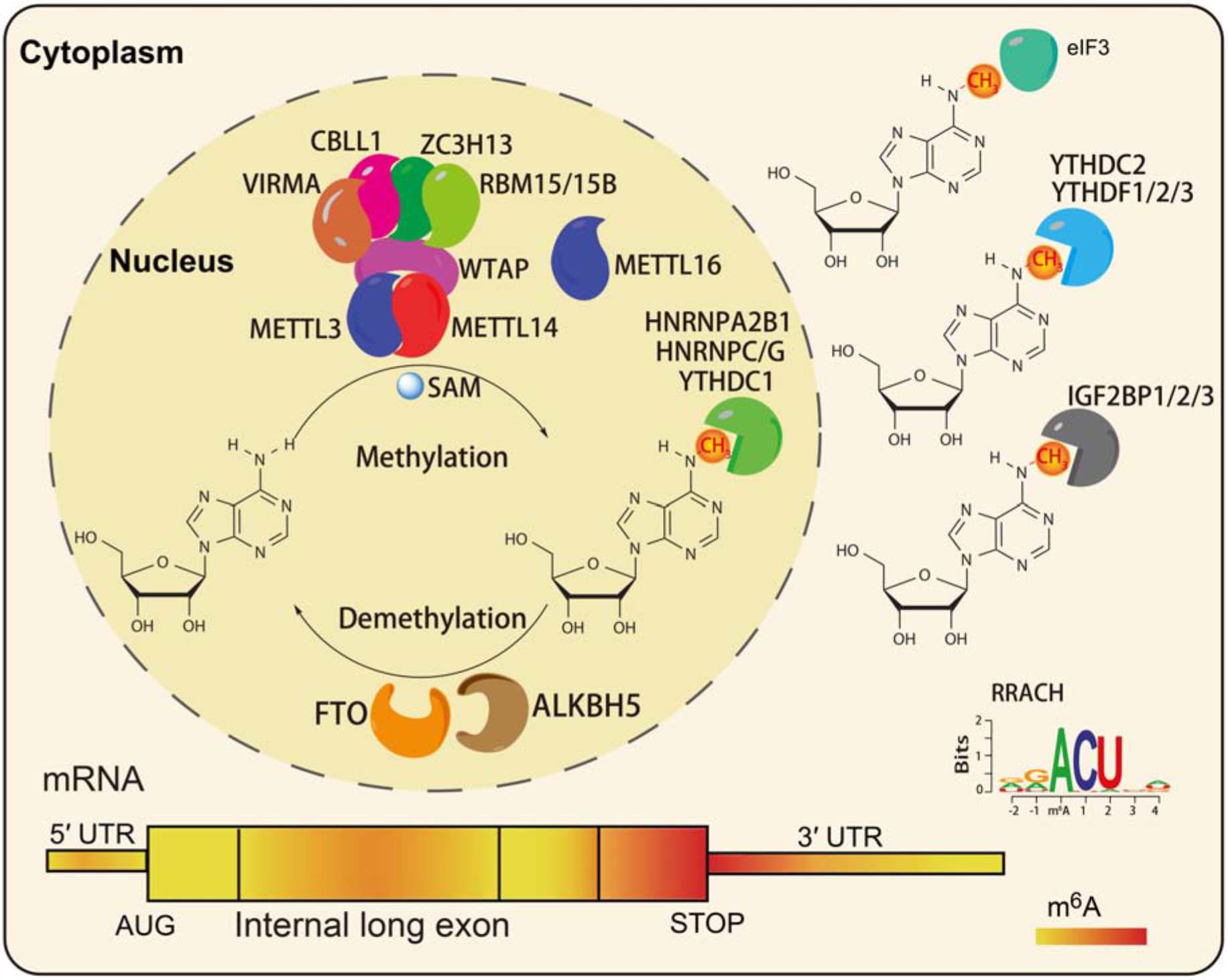
The m6A modification is not simply a permanent molecular mark. It is dynamically regulated by enzymes that install, remove and recognize methylation signals. This system allows cells to adjust RNA activity according to different biological conditions.
The Three Main Components: Writers, Erasers and Readers
A central concept in m6A RNA methylation research is the interaction between three groups of regulatory proteins. They are commonly described as writers, erasers and readers.
Writers
Methyltransferase proteins install methyl groups on RNA. METTL3 and METTL14 form a major component of the m6A writer machinery, working with additional regulatory proteins such as WTAP and VIRMA.
Erasers
Demethylase enzymes can remove m6A modifications. FTO and ALKBH5 are two important enzymes studied in the dynamic regulation of RNA methylation.
Readers
Reader proteins recognize modified RNA sites and influence downstream processes. YTH-domain proteins and IGF2BP family members are important examples.
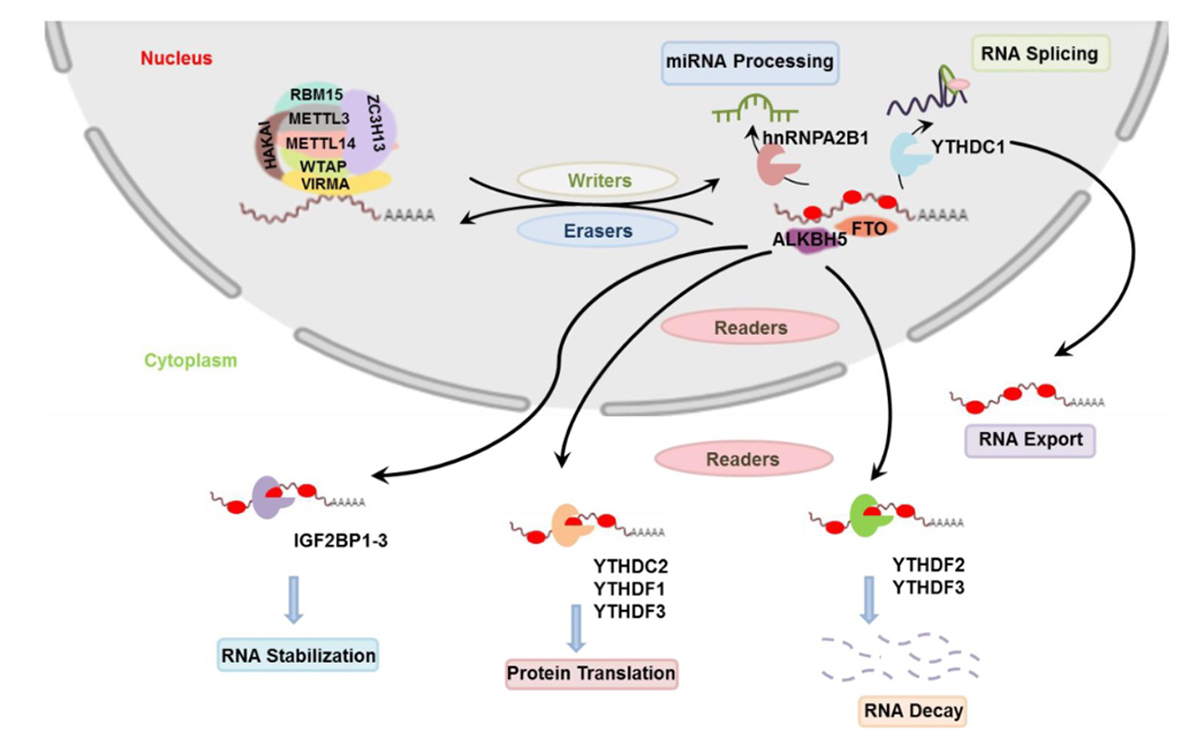
The balance between these regulatory components helps determine the functional consequences of RNA methylation. Depending on the transcript and cellular context, m6A recognition can influence RNA degradation, stabilization, translation, splicing and nuclear export.
How Does RNA Methylation Influence Gene Expression?
RNA methylation adds an important regulatory layer between transcription and protein production. By influencing the processing and fate of RNA molecules, methylation can affect how genetic information is converted into functional proteins.
1. RNA Stability and Degradation
RNA methylation can influence how long an RNA molecule remains available inside a cell. Specific reader proteins may promote RNA stabilization or recruit molecular machinery involved in RNA degradation.
2. Translation Regulation
Chemical modifications can affect how ribosomes and associated proteins interact with messenger RNA. This can alter the efficiency of protein synthesis under different cellular conditions.
3. RNA Splicing and Processing
RNA modifications can influence the selection and processing of RNA segments during maturation. These processes contribute to transcript diversity and the regulation of gene expression.
4. RNA Transport and Localization
Certain RNA modifications and their associated reader proteins participate in the regulation of RNA movement between cellular compartments, influencing where transcripts become available for translation.
RNA Methylation and Other RNA Modifications
RNA methylation is part of a much broader landscape of post-transcriptional modifications. Researchers have identified more than 170 different RNA modification types, although their abundance and functions vary across RNA classes and organisms.
| Modification | Full Name | Research Focus |
|---|---|---|
| m6A | N6-Methyladenosine | RNA processing and translation |
| m5C | 5-Methylcytosine | RNA stability and transport |
| m1A | N1-Methyladenosine | RNA structure and metabolism |
| m7G | 7-Methylguanosine | RNA processing and translation |
| m6Am | N6,2'-O-Dimethyladenosine | RNA cap-associated regulation |
| 2'-O-Me | 2'-O-Methylation | RNA structure and stability |
Applications of RNA Methylation in Molecular Biology Research
Understanding RNA methylation is relevant to several areas of contemporary life science research. The ability to identify and characterize RNA modifications provides researchers with additional information about molecular mechanisms and gene expression networks.
Epitranscriptomics and Transcriptomics
Combining RNA modification analysis with transcriptome-wide sequencing helps researchers investigate the relationship between RNA abundance, modification patterns and gene expression profiles.
Cell Biology and Developmental Research
RNA methylation is being investigated in cellular differentiation, stem cell biology, embryonic development and the regulation of cell identity.
Immunology and Molecular Signaling
Researchers are exploring how RNA modifications participate in immune-related molecular pathways, RNA recognition and cellular responses to environmental signals.
RNA Biology and Biotechnology
Knowledge of RNA methylation contributes to the broader understanding of RNA engineering, RNA-based research systems, molecular biotechnology and the design of advanced experimental workflows.
Techniques Used to Study RNA Methylation
Modern RNA methylation research combines molecular biology techniques, sequencing platforms and analytical approaches to identify specific modifications and understand their distribution across RNA molecules.
- MeRIP-seq / m6A-seq: Antibody-based enrichment and sequencing for transcriptome-wide m6A profiling.
- miCLIP: Crosslinking-based approaches for higher-resolution mapping of RNA modification sites.
- LC-MS/MS: Mass spectrometry for identifying and quantifying RNA nucleoside modifications.
- RNA sequencing: Transcriptome analysis to investigate RNA expression and processing.
- Nanopore sequencing: Direct RNA sequencing approaches being developed and applied to investigate RNA modifications.
- Bioinformatics: Computational analysis, modification-site prediction and integration of RNA sequencing datasets.
Challenges and Future Perspectives in RNA Methylation Research
Despite substantial advances, RNA methylation research continues to face important technical and analytical challenges. Detecting modifications at precise nucleotide positions, distinguishing between different RNA species and accurately measuring modification abundance remain active areas of investigation.
Another important challenge is understanding how RNA modification patterns vary between cell types, tissues and experimental conditions. Integrating single-cell sequencing, spatial transcriptomics, proteomics and advanced bioinformatics may help reveal this biological complexity.
As analytical technologies continue to evolve, epitranscriptomics is expected to contribute to a more detailed understanding of post-transcriptional gene regulation and RNA biology.
Conclusion: Exploring the Future of RNA Biology
RNA methylation represents a fascinating dimension of molecular biology, connecting chemical modifications with gene expression, RNA metabolism and cellular function. From m6A and m5C to emerging modification types, the epitranscriptome offers researchers new opportunities to investigate how RNA molecules are regulated.
Continued progress in RNA sequencing, molecular detection, mass spectrometry and computational biology will be essential for advancing RNA methylation research and understanding the complex molecular language of cells.
Scientific References and Further Reading
- Zaccara et al. (2019). Reading, writing and erasing mRNA methylation. Nature Reviews Molecular Cell Biology .
- Wiener & Schwartz (2021). The epitranscriptome beyond m6A. Nature Reviews Genetics .
- Regulation and functions of non-m6A mRNA modifications. PubMed .
- Sequencing methods and functional decoding of mRNA modifications. PubMed Central .
- The Epitranscriptome. National Institute of Environmental Health Sciences .